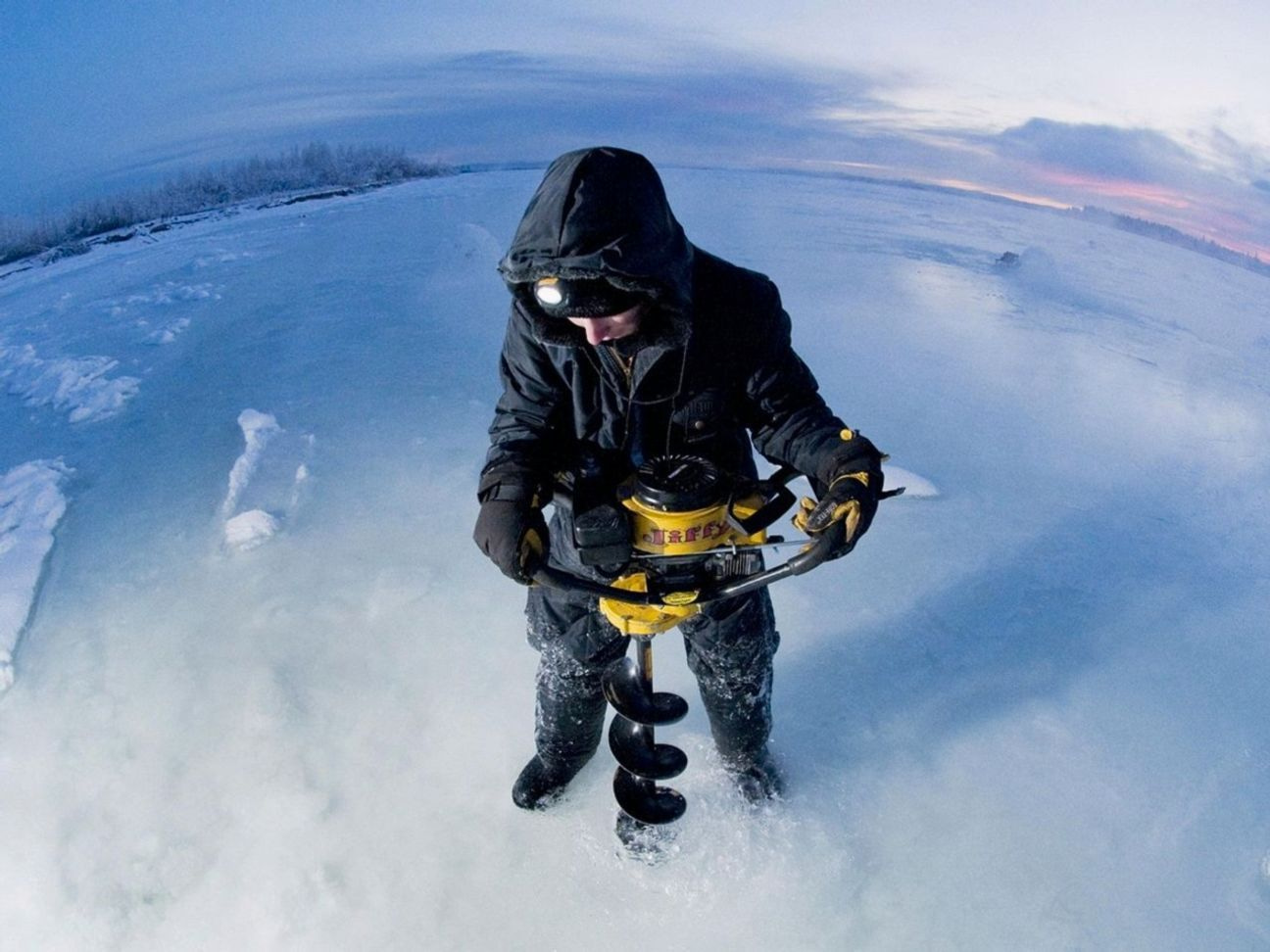
There is a stretch of the early morning that belongs almost entirely to ice anglers. It begins about an hour before first light and ends when the sun breaks clear of the horizon. Anyone who has sat on the ice through it will tell you the same thing: it is not the view that keeps you coming back — it is the fishing itself.
The dark holds more than you think
The first surprise is how much activity you can sense beneath the ice. With no light to guide you, attention turns downward — the subtle shift of a lure that signals a pike below, the small creak of settling ice, the distant call of another angler finding their spot across the lake. People who rush find themselves stopping every few minutes, waiting for the next sign.
None of this is luck. Sound travels further through cold, still air, and ice amplifies what happens beneath it. Knowing the science does not make it any less remarkable the first time you feel a strike transmit up through the rod.
The second surprise is how much you learn to see. Given twenty minutes on the ice without a lantern, most people can read the surface by the faint difference between frozen and water. The trick is to trust the peripheral sense — a twitch in the rod tip, a shift in the hole's appearance, the subtle signs that a perch or pike is investigating your bait.
There is a limit, and it is worth respecting it. Under heavy cloud with no moon the ice becomes one with the sky, and the sensible thing is to use the light you brought. Nobody wins by taking unnecessary risks on open water.
What early season fishing demands
An earlier bedtime, which is the part almost nobody manages. One more layer than you think necessary, because the coldest point arrives shortly before sunrise rather than in the middle of the night. And a stretch of local waters you already know, since this is not the time to explore unfamiliar ice.
Also: tell someone where you are going and when you expect to return. This single habit is what separates the regulars who fish for years from the people who do it twice. It costs nothing and it removes the only genuinely dangerous outcome from the morning.
Beyond that it asks for very little. A headlamp you keep switched off unless you need it, something warm to drink, and enough time that you are not watching for first light. The point is to arrive early and wait for the bite.
You do not go out to watch the sun rise. You go out to be there while the fish decide to feed.
Then the fishing window opens
The bite does not start all at once, and it does not begin where you expected. Long before anything shows in the east, you feel the first tentative strikes — a perch investigating, then a solid tug, then the moment you know something substantial is down there. The real action comes before full light arrives.

There is a short window, maybe twenty or thirty minutes, when the low sun hits the ice at the perfect angle and every lure movement becomes visible beneath the surface. Then the sun lifts higher, the shadows shorten, and the underwater world becomes harder to read again.
The temptation now is to photograph your catch, and there is nothing wrong with that, though almost everyone reports the same thing. The photographs are good, but they do not capture the cold hours of focus that preceded them or the quiet satisfaction of knowing your local waters.
Going back out
The mornings that produce nothing are useful too. Flat grey light, wind that makes sitting still miserable, an hour of waiting for nothing worth noting in the season report — these are what make the good mornings stand out. Without them the whole pursuit collapses into luck.
Fish often enough and you stop treating each trip as the same. You start to read the conditions — the feel of the air, the angle of the wind, the subtle signs that tell you whether this spot will hold perch or pike. You will be wrong often enough to keep coming back, but the honest reason has little to do with catching fish: for a few hours nothing is asked of you, the day has not yet begun making its case, and you are alone with your community of anglers doing exactly the same thing.
Marcus H. fishes the ice season every year and contributes catch reports and seasonal tips to Cozy Icecamp throughout the winter.